Cold Comfort: Why Your Air-Con Deserves a Weekly Run Long Before June
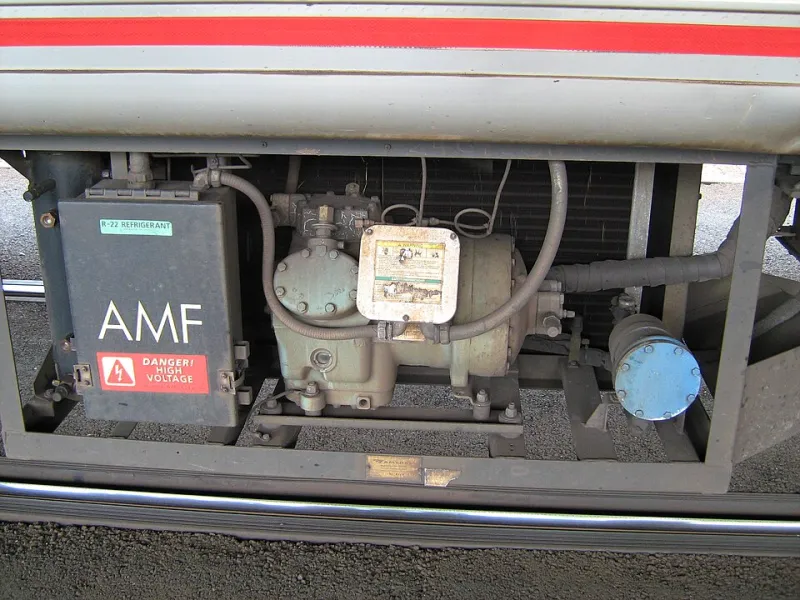
Photo: CZmarlin — Christopher Ziemnowicz, a photo credit would be appreciated if this image is used anywhere other than Wikipedia. Please leave a note at Wikipedia here. Thank you!, Public domain, via Wikimedia Commons
Air-conditioning in November sounds a bit like putting the heating on in July. It seems wasteful, slightly contrary, and not what the button is for. But the air-con system in a modern car is not just a chiller. It is also a dehumidifier, and in a British winter that second job is arguably more useful than the first.
Why winter is hard on air-con
The system works by compressing refrigerant and sending it through a condenser and an evaporator. When it runs, it removes moisture from the air inside the car. That is why the screen clears faster when the air-con is on, even with the heater set to warm. The cold, damp weather we get from November onwards is exactly when a car fills up with condensation, wet coats and muddy boots.
There is a mechanical reason to run it, too. The compressor and the seals rely on refrigerant and lubricant moving around the system. Leave the air-con unused for months and those seals can dry out or shrink. A tiny leak can start, the refrigerant escapes, and suddenly a system that was fine in September is doing nothing but making a noise in June.
The ten-minute weekly habit
You do not need to freeze yourself to look after the system. Once a week, while you are driving normally, switch the air-con on and let it run for about ten minutes. Set the temperature to something comfortable, use fresh-air mode rather than recirculation if the screen is misting, and leave the fan on a sensible setting. The idea is simply to get the system circulating and doing its dehumidifying job.
Do not just start the car on the driveway and leave it idling for ten minutes. That is a waste of fuel and it is not great for the engine or the neighbourhood. Do it on a journey you were making anyway. If you drive an electric car, the principle is the same, though you may notice a small hit to range. A ten-minute run once a week is a tiny price compared with a compressor repair.
Use the air-con when you demist, too. A lot of drivers instinctively reach for the hottest setting and the fastest fan, then wonder why the screen takes ages to clear. Warm air plus air-con plus fresh air is the combination that shifts moisture fastest. If your car has a dedicated front-screen demist button, it often does most of this for you.
Warning signs of a tired system
A healthy air-con should be quiet, cold when asked, and free of strange smells. If you notice a musty, damp-sock odour when you switch it on, that is often bacteria or mould growing on the evaporator. A cabin filter that has not been changed for a few years can make this worse. If airflow is weak, the filter or the blower may be the culprit.
Other red flags include a rattle or click when the compressor engages, water in the footwell, or a screen that refuses to demist even with the air-con on. Poor cooling in summer is the obvious one, but by then you have missed the chance to catch a small problem early. If the system is blowing warm air in winter and cold air in summer, that is not a personality quirk. It is a fault.
What a regas does and does not fix
A regas removes the old refrigerant, pulls a vacuum to check for obvious leaks, and refills the system with the correct amount of refrigerant and lubricant. If your system is simply low on gas, a regas can restore performance. It is a sensible service on a car that has not had one for several years.
What a regas does not do is fix a leak. If there is a hole in a pipe, a failed seal or a corroded condenser, the new gas will leave the system again. A good garage should offer a leak test or use UV dye before filling, especially if the system has been empty for a while. A regas also will not cure a failed compressor, a blocked cabin filter, or a mouldy evaporator. Those are separate jobs.
Prices vary, and the type of refrigerant matters. Some newer cars use a more expensive refrigerant, so do not assume every regas is the same price. Ask what is included, whether a leak test is part of the job, and whether the cabin filter will be checked. A cheap regas that ignores a leak is not a bargain.
The cost maths
A regas is a routine cost. A new compressor is a proper repair bill, often several hundred pounds before labour. A cabin filter is usually modest and takes minutes to change on many cars. The weekly habit is free apart from a little fuel. That is the whole argument in one sentence: ten minutes of use is cheaper than a system that seizes from neglect.
Your winter air-con diary
Once a week, run the air-con for ten minutes on a normal journey. Once a month, check that the screen demists cleanly and that there is no new smell or noise. Before winter properly bites, check the cabin filter and book a service if the system has not been looked at for a few years. If you are heading into a cold snap, do not wait for June to find out that the air-con has quietly stopped working.
The system is there all year. Treat it that way and it will keep your screens clear, your seals supple and your repair bills smaller.