The Frost Finds the Weak Cell: A Five-Minute Battery Audit for UK Mornings
There is a particular kind of UK morning that catches people out. The windscreen is frosted, the kettle is on, and the car turns over with a lazy, reluctant groan before finally catching. A week later it does not catch at all. The battery has not suddenly failed overnight; the cold has simply made an existing weakness impossible to ignore.
A battery is a chemical device, and cold weather slows the reactions inside it. At the same time, the engine is harder to turn over, the heater blower is working, the lights are on and the heated rear screen is doing its thing. A battery that had just enough margin in October can run out of goodwill in November. The good news is that you do not need a garage visit to spot the warning signs. Five minutes with a torch, a multimeter and a little honesty about your driving habits will tell you plenty.
Why the first frost feels like a betrayal
Batteries rarely die on a warm, convenient afternoon. They fail on the morning you are already late, usually in the dark, often in a car park with no phone signal. The first cold spell is simply the exam. If the battery is four or five years old, has been fed a diet of short school runs and has never had a maintenance charge, it is already on borrowed time.
Our view at CarBay is simple: a battery should be treated like a consumable, not a mystery box. You would not wait for a tyre to go flat before checking the tread. The same logic applies here.
Minute one: look before you measure
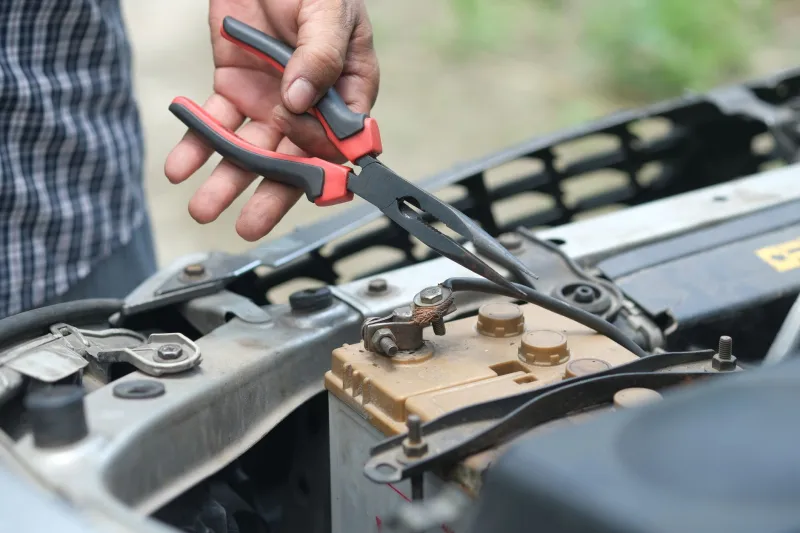
Open the bonnet and have a proper look. Check the battery case for swelling, cracks or damp patches. Make sure the clamp holding it down is secure — a battery that can slide about is asking for trouble. Then look at the terminals. A bit of grey dust is normal; a fluffy white or green crust is not. That corrosion can stop the alternator charging properly and make starting harder than it needs to be.
If the terminals are dirty, clean them carefully with a small brush and a solution of bicarbonate of soda and water, keeping the debris away from paintwork and your eyes. Dry everything, reconnect tightly, and apply a thin smear of petroleum jelly to help keep corrosion at bay. Do not go poking around with a screwdriver or remove terminals unless you know what you are doing; on modern cars, disconnecting the battery can upset radio codes, alarm settings and learned driving data.
Minute two: the multimeter number that actually matters
A basic multimeter costs less than a tank of fuel and takes the guesswork out of battery checks. Set it to DC volts, switch off the ignition, headlights and any interior lights, and let the battery rest for a few minutes if the car has just been running.
A healthy, fully charged battery should show around 12.6 volts or a little more. Around 12.4 volts is roughly half-charged. Down at 12.2 volts or below, the battery is weak and likely to struggle when the temperature drops. If you see something closer to 12.0 volts, do not assume it is finished — but do not assume it is fine either. It needs charging and testing.
While you are there, check the charging voltage with the engine running. You should see somewhere around 13.8 to 14.4 volts across the terminals. If that number is low, the alternator or belt may be the problem rather than the battery. If it is very high, get it checked before it cooks the battery.
Minute three: listen and watch
The car has been telling you things all along. A slow, laboured crank is the classic clue. So are dash lights that dim when you turn the key, a clock or radio that resets itself, a keyless entry system that needs two presses, or a stop-start system that has quietly given up. If the battery warning light stays on after the engine starts, that is a job for a garage, not a hopeful wait-and-see.
The short-trip trap
This is the quiet killer for a lot of UK drivers. A cold start takes a big chunk of energy out of the battery. A ten-minute run to the shops barely puts it back, especially with lights, wipers, heaters and heated seats all demanding power. Do that five days a week and the battery lives permanently below full charge. It might start the car today, but it has less and less in reserve for the first hard frost.
If your car mostly does short journeys, give it a longer run once a week or so — twenty to thirty minutes at a sensible speed, not idling on the drive. If that is not practical, a smart maintenance charger is a better answer than pretending the problem will sort itself out.
Trickle chargers, smart chargers and the old hopeful jump start
A cheap unregulated trickle charger can do more harm than good if left connected for days. Look for a smart charger with a maintenance or float mode. Connect it with the charger switched off, follow the instructions, and make sure the battery is in a well-ventilated space. It is a sensible investment for a second car, a weekend toy or anything that sits for long periods.
A jump start is a rescue, not a repair. If you are jumping the car more than once in a fortnight, stop treating the jump pack as a permanent solution. Repeated boosting puts strain on the battery and the car's electronics, and it is only a matter of time before it lets you down somewhere less convenient.
When replacement is the sensible option
If the battery is four to six years old, has been flat more than once, or fails a proper load test at a motor factor, replace it. Swelling, leaking or a case that looks distorted are also clear signals. Make sure you buy the right size and specification — particularly if your car has stop-start, which usually needs an AGM or EFB battery rather than a standard lead-acid unit. Some cars also need the new battery registered with the vehicle's charging system, so ask before you fit it yourself.
A five-minute check will not guarantee a trouble-free winter, but it gives you a fighting chance. Better to find the weak cell on a bright Saturday afternoon than on a frosty Monday morning with the defrosters on and somewhere to be.