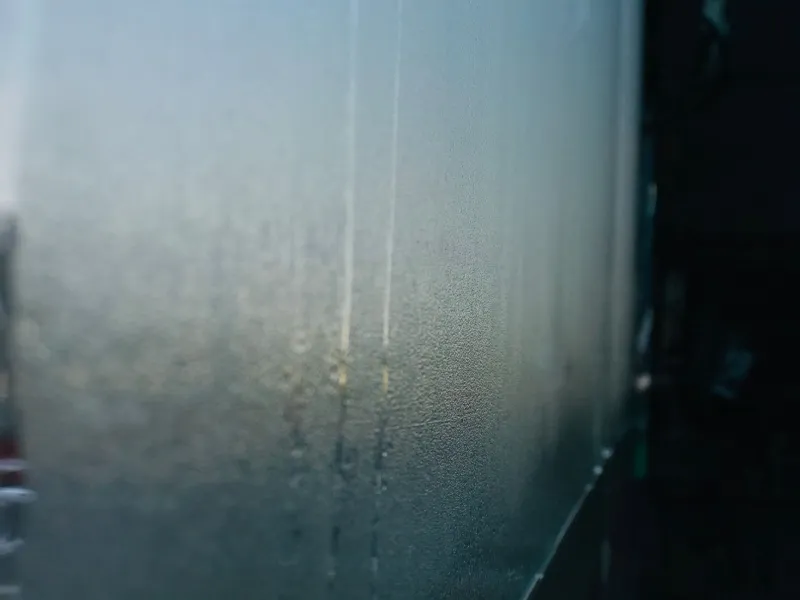
Smear Campaign: How to Tell If Your Wipers Are Past Their Best

November has a way of finding the gap between a windscreen that clears and one that merely lets you guess. You notice it first on a wet morning: the blade drags, leaves a grey film, then thumps back down. By the time you are joining the M6 in lorry spray, you are squinting through a smear rather than looking through a windscreen. Wiper blades are one of the cheapest safety parts on your car, and one of the easiest to ignore until the rain makes the decision for you.
The ten-second streak test (and why your driveway is enough)
Wet the screen with the washers or a watering can. Run the wipers on slow speed and watch the swept area as the blade returns. A healthy pair leaves an even, clear film with no arcs, lines or patches. A tired pair leaves streaks, a crescent of uncleared glass, or a fine mist that dries into a haze. Do it from outside as well: lift the arm and look along the rubber edge against the light. You are checking for a clean, square contact edge, not a rounded or chipped one.
The test is not about one dramatic stripe. It is about the pattern. If the blade clears one side and smears the other, or if the passenger side is worse than the driver side, the rubber has started to lose contact. That matters most in the dark, in heavy rain, and when low winter sun turns a smeared screen into a hall of mirrors.
Dirty blade or dead blade?
Not every smear means a trip to the motor factor. A blade that has been sitting under a lime tree, or one that has just come back from a car wash full of wax, can carry a film of grit and product. Clean it first: lift the arm, wipe the rubber edge with a damp microfibre and a little mild soapy water, then rinse. A cloth dampened with isopropyl alcohol can shift stubborn traffic film, but do not soak the blade or use neat detergent. Never use WD-40 as a wiper lubricant; it attracts dirt and can degrade rubber.
Once clean, run the test again. If the smear has gone, you have saved yourself a few quid. If it is still there, look closely at the edge. Cracks, missing chunks, a hardened shiny surface, or rubber that has started to separate from the metal spine all mean the blade is worn. So does a blade that chatters and judders across the glass even when the screen is properly wet. In the UK, a typical pair lasts six to twelve months. Cars parked under trees, near the coast, or in blazing south-facing spots often chew through them faster.
Chatter is not always the blade's fault
Before you blame the rubber, clean the glass. Traffic film, polish residue and hard-water spots can make a new blade skip. Wash the screen with hot soapy water, rinse, and dry with a clean cloth. A glass polish or a proper clay bar treatment can help if the screen feels rough. Check the arm too: a weak spring or a bent arm can stop the blade sitting flat. Do not start bending the arm unless you know what you are doing.
When to replace, and how to avoid paying over the odds
Replace both front blades at the same time. They do the same job in the same weather, and a new driver-side blade next to a tired passenger-side one is a false economy. Check the handbook or measure the old blades before you buy. Most UK cars take conventional, flat-beam or hybrid blades, and the fitting clip matters as much as the length. A known brand from a motor factor, Halfords or a dealer is usually a safer bet than a no-name set from an online marketplace.
Fitting is usually a five-minute job: lift the arm, press the release tab, slide the old blade off, click the new one on. Do not let the bare arm snap back onto the glass. Keep a cloth over the screen while you work. Expect to pay roughly £15 to £30 for a decent pair, more for longer or specialist blades. Check the rear wiper too; it is easy to forget until you are reversing in the rain.
The upkeep that buys you extra months
Clean the blades every few weeks with a damp cloth. Use proper screenwash at the right concentration for winter; washing-up liquid is false economy because it strips protective films and leaves residue. Clear snow and ice from the blades by hand before you switch them on, and never pour boiling water on the glass. If you use de-icer, let it do its job and wipe the blade edge afterwards. A little care goes a long way, but it will not rescue rubber that has already gone hard.
The bottom line
A smear across the windscreen is not a cosmetic issue. It stretches brake lights, hides cyclists and turns a rainy roundabout into a blur. If your blades still streak after a clean, replace them. Twenty quid and five minutes is a small price for a clear view when the weather turns. Do the streak test today, before the next front comes in off the Atlantic.